 Become Fighter
Learn Kickboxing
Boxing hands with teeps and round kicks. A stance that does both, then the kicks, the defence and the combinations that join them.


What you learn
Boxing hands with teeps and round kicks, then counters, advanced kicks and fight craft for the ring. You will learn 14 techniques: Jab, Cross, Teep, Low kick, Body kick, High kick, Switch kick, Check, Shin block, Catch, Lead body kick, Lead low kick, Spinning back kick, Question-mark kick.
Lessons
Each lesson has key points, a step-by-step guide, common mistakes and a timed drill. Start at the top and work down.
Kickboxing base
A stance that can punch and kick, then the first kick every fighter learns: the teep.
- 1How to stand in a kickboxing stance FreeBoxing's guard with your weight more central and your lead leg light.
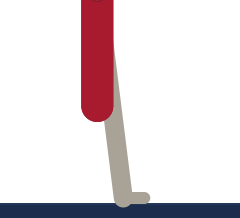 How to keep your hands up while kicking FreeThrow the jab and cross without losing the balance you need to kick.



Round kicks
The rear round kick to the legs, body and head, then the switch kick that makes it faster.
 How to throw a rear low kick ProA round kick to the outside of the thigh, driven by the turn of your whole body.
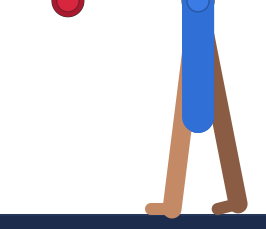
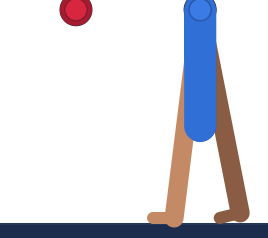 How to throw a rear high kick ProA round kick to the head, built on the same hip turn. Only throw it when you are warm.
 How to throw a switch kick ProSwap your feet, then kick with the leg that was in front. Quicker and often stronger.

Defending and combining
Check incoming kicks, then link your hands and kicks into combinations.

- 9How to combine punches into kicks ProUse the jab and cross to cover your entry, then finish with a kick.
- 10How to follow kicks with punches ProLand a kick, then step in behind it with punches while the opponent is busy.
- 11How to put kickboxing combinations together ProA full round that mixes everything: teeps, kicks, punches, checks and movement.
Range and timing
Using kicks to control distance and beat the opponent's rhythm.
- 12The teep as a range tool: Kickboxing guide ProStop the advance, keep the gap and set up everything else with the front kick.
- 13Distance management: Kickboxing guide ProKnow which weapons live at which range, and choose the range yourself.
- 14Feints and rhythm changes: Kickboxing guide ProMake the opponent react to attacks that never come, then hit the opening they leave.
- 15Timing the counter kick: Kickboxing guide ProHit the opponent as they step in or as they start their own attack.
Defending kicks
Beyond the check: catching, blocking and countering.
- 16Blocking body and head kicks: Kickboxing guide ProCover with the arm and glove, absorb with the legs, and give nothing away.
- 17The shin block for low kicks: Kickboxing guide ProLift the leg to meet the kick so it hits shin, not soft thigh.
- 18
- 19Stepping off the line and countering: Kickboxing guide ProLet the kick miss, then punish the empty stance with your hands.
Kick and punch combinations
Longer chains that use the hands to open the legs and the legs to open the hands.
- 20
- 21Landing the kick and punching through: Kickboxing guide ProUse the kick's momentum to step into punches without a reset.
- 22Changing levels with kicks: Kickboxing guide ProChain low, body and head kicks so the opponent cannot guard one target.
- 23Broken rhythm and doubling up: Kickboxing guide ProPause, double up and change tempo so the opponent mistimes their counter.
Advanced kicks
The lead-leg round kick, the spinning back kick and the question-mark kick, with honest notes on risk.
- 24The lead round kick: Kickboxing guide ProA fast kick from the front leg to the thigh and ribs that needs no wind-up.
- 25The spinning back kick: Kickboxing guide ProA powerful kick that turns your back to the opponent. Learn the safe version first.
- 26The question-mark kick: Kickboxing guide ProA kick that starts like a teep or body kick and finishes up high.
- 27Hook, axe and flying kicks: what to leave out: Kickboxing guide ProKnow which showy kicks are worth your time and which cost more than they earn.
Counter-kicking and catching kicks
Turn every kick thrown at you into the start of your own attack.
- 28
- 29Catch and sweep: Kickboxing guide ProWhere the rules allow it, take the standing leg after you catch the kick.
- 30Kicking into the advance: Kickboxing guide ProHit the opponent with a kick as they step in to throw.
- 31Winning the kick exchange: Kickboxing guide ProWhen both of you are throwing, make yours land first and hurt more.
Style matchups
Read the opponent in front of you and adjust: pressure, counter-kickers, southpaws and rule sets.
- 32Fighting a pressure fighter: Kickboxing guide ProStay on the move, stop the advance and make them pay for coming in.
- 33Fighting a counter-kicker: Kickboxing guide ProAgainst someone who waits for your kick, stop giving them one to counter.
- 34Orthodox against southpaw: Kickboxing guide ProWhere the angles change and which kicks work against an opposite stance.
- 35K-1, full-contact and other rule sets: Kickboxing guide ProThe same kick scores differently under different rules. Learn the ones you will fight under.
Sparring
Technical rounds, hard rounds, protective gear and how to learn from every session.
- 36Technical sparring: Kickboxing guide ProLight, controlled rounds where you practise skills and not winning.
- 37Gear and safety: Kickboxing guide ProWhat to wear, how to check it and the rules that keep sparring safe.
- 38Hard sparring and controlled power: Kickboxing guide ProHow to turn the pace up, who to do it with and when to stop.
- 39
Fight craft
Round strategy, scoring, game plans and the week of the fight.
- 40Round strategy and scoring: Kickboxing guide ProHow a round is judged, and how to win the ones that matter.
- 41The game plan and the corner: Kickboxing guide ProBuild a plan around your strengths, and learn to take instructions between rounds.
- 42Fight week and nerves: Kickboxing guide ProSleep, food, routines and keeping calm in the days before.
- 43Fight day warm-up: Kickboxing guide ProA warm-up that wakes up the body and settles the head before you walk out.
Who it's for
Beginners, and anyone who wants to tidy up the basics. You don't need a gym, a partner or any kit, although some lessons are better with a partner.
Safety
Combat sports training is hard on the body. Warm up, stay within your limits and check with a doctor first if you have a health condition. Practise in a clear space and stop if you feel pain or dizziness. Learn partner work only under a qualified coach.
Get it on Google Play. Coming soon to the App Store.